
This guide covers what retinoids are, how they work and how to use them safely. You’ll learn about the different types, how to introduce them into your routine, which ingredients to avoid combining, and how to build your skin’s tolerance. We’ll also cover choosing the right strength for your skin and concerns.
Understanding Retinoids
Retinoids are one of the most well-studied ingredients in skincare, with evidence supporting their use for a range of common skin concerns. They belong to the vitamin A family and are valued for their ability to target visible signs of skin ageing.
As we age, and with ongoing exposure to environmental stressors, skin gradually loses collagen and elastin. This can lead to uneven texture and tone, dullness, fine lines, wrinkles, and reduced firmness and elasticity.
Retinoids can help counteract these visible changes by supporting collagen production and skin renewal, helping skin look smoother, firmer and more even.
Often considered a skincare gold standard for ageing skin, retinoids are a great ingredient to understand if you want to maintain healthy, youthful-looking skin. Let’s take a closer look at how they work and how to use them effectively.
How Retinoids Work
Retinoids work on two key processes linked to the appearance of ageing skin: collagen production and cell turnover.
Collagen helps keep skin firm, smooth and youthful, but its production naturally declines with age. Retinoids help support collagen production, which can improve the appearance of fine lines, wrinkles and loss of firmness. Retinoids switch on receptors we have in the skin leading to increased cell turnover and collagen production. This process helps unclog pores and stimulate fibroblasts to reduce skin concerns such as acne, premature ageing and pigmentation.
They also increase skin cell turnover—the natural process of shedding old skin cells and replacing them with new ones. This helps smooth uneven texture, brighten dull-looking skin and improve the appearance of uneven skin tone.
In short, retinoids work beneath the surface to help your skin look smoother, firmer, brighter and more even over time.
Choosing the Right Retinoid
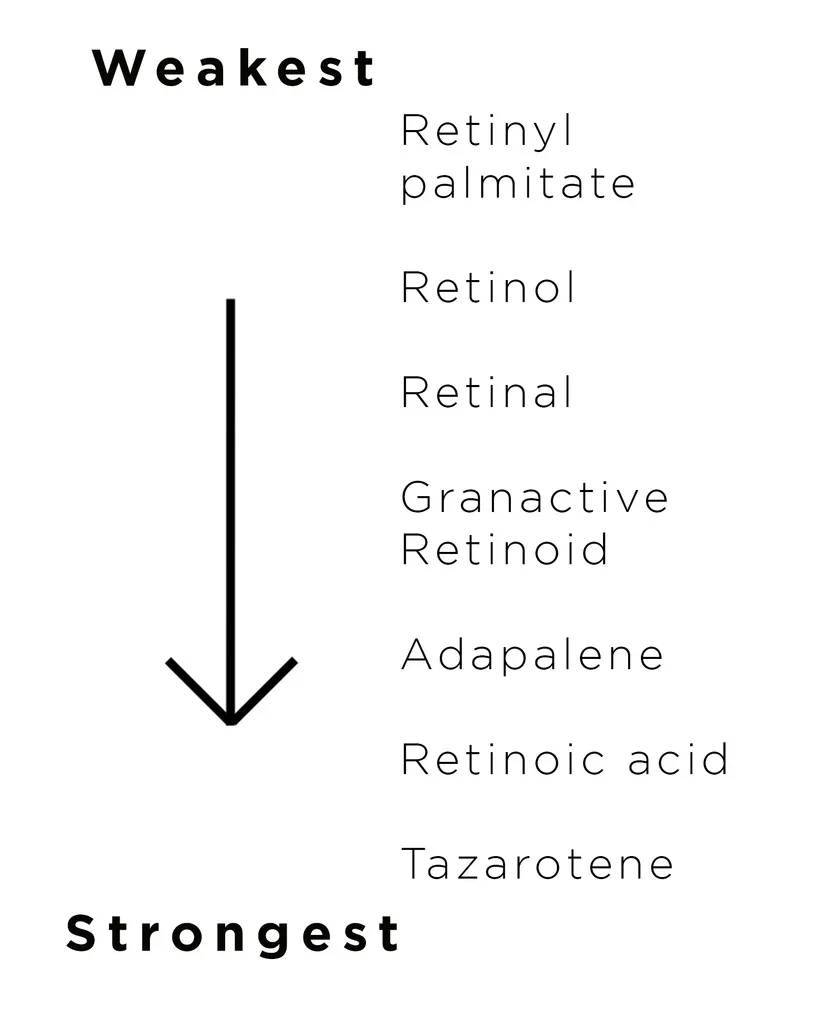
Retinoid is the umbrella term for a family of vitamin A-derived ingredients. Three common options in skincare are retinol, Granactive Retinoid™ and retinal (retinaldehyde).
Not all retinoids are created equal. Understanding the differences helps us choose the one that offers the most benefits for our skin.
Retinol is the most common form of retinoid. While it is proven to be effective, it is also the least stable and can be easily degraded by light and air.
Retinaldehyde requires just one oxidation before it can convert to all-trans retinoic acid (the form of vitamin A that can interact with specialised retinoid receptors). Like retinol, it can benefit from a process called encapsulation, which helps protect it from breaking down.
Retinyl palmitate struggles to make it past the skin barrier, it needs three steps, which slows down how it works.- you can do better!
Hydroxypinocolone retinoate (aka Granactive Retinoid) is already in its active form and can bind directly to the skin's retinoid receptors without needing a complex multi-step breakdown.. This makes it less irritating and the best option for sensitive skin.
Granactive Retinoid is the new generation stable cosmetic ester of gold-standard retinoic acid.
Ultimately, choosing the right retinoid comes down to your skin concerns, experience with retinoids and how well your skin tolerates them.
When Should You Start Using Retinoids
There’s no one-size-fits-all age to start using retinoids. They can be introduced when you begin noticing concerns such as fine lines, uneven texture, pigmentation or breakouts—often from your late 20s or early 30s.
If you’re new to retinoids, start low and go slow. Patch test first, then begin using your retinoid a couple of nights a week and gradually increase as your skin builds tolerance.
Some dryness, redness or mild peeling can happen while your skin adjusts, but more irritation isn’t better. Listen to your skin and reduce frequency if needed.
And most importantly, SPF every morning. Retinoids work best as part of a consistent routine that includes daily sun protection.
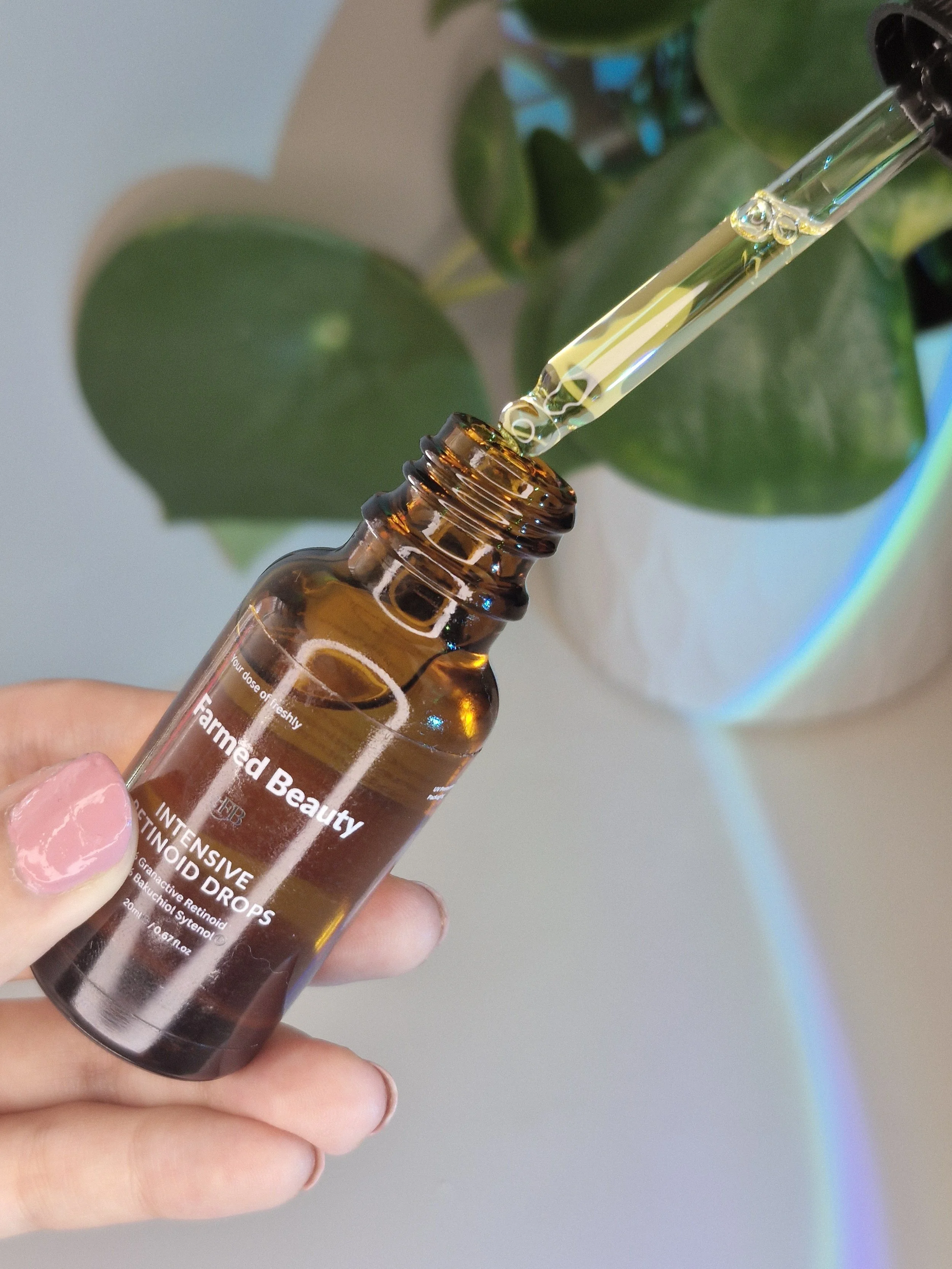
While our Intensive Retinoid Drops with 5% Granactive Retinoid and 1% Bakuchiol can safely be used daily, every individual’s skin is different, and some may prefer to use a new concentration less frequently to begin with. Similarly, experienced retinoid users may wish to begin their own retinoid journey with a high-strength formulation.
If you’re already experienced with retinoids, you may be able to start with a higher-strength formula—but your skin’s tolerance should always guide you.
When do I use my retinoid?
As a rule, retinoids are best used at night - this is because daytime UV rays break most of them down. Our skin is really clever - during the day it winds our DNA away on proteins called histones to help protect it from damage from UV light. But at night, special genes that can discern when it's dark, called clock genes, tell our DNA to uncoil and get repaired - the perfect time for retinoids to act.
What Ingredients to Avoid With Retinoids
While using retinoids, certain combinations with other ingredients can increase the likelihood of irritation and sensitivity.
Direct Acids and Copper Peptides:
As both retinoids and direct acids or copper peptides have the capacity to support the skin’s natural exfoliating mechanism, combining both into one regimen may increase the chances of developing skin sensitivities. If you wish to combine both products into a regimen, we recommend using them on alternate days and/or nights.
Direct Vitamin C:
With skin tolerance in mind, we do not recommend combining retinoids with Direct Vitamin C (L- Ascorbic Acid) as this may increase the chances of developing skin sensitivities. If you wish to incorporate both into a regimen, we suggest using them on alternate evenings and waiting until your skin has adjusted to one before introducing another.
Other Retinoids:
Retinoids have the capacity to support the skin's natural exfoliating mechanisms. As such, we do not recommend combining multiple retinoids in one regimen, as this may increase the chances of over-exfoliating the skin and developing skin sensitivities.
A side note: When it comes to retinoids and pregnancy, the Medical Advice is to avoid use of any vitamin A derivative including all retinoids no matter the strength as these can harm your baby.